How a Pharmaceutical Company Moves Regulated Lab Data Across Locked-Down Networks With Minimal Upkeep
GoodSync bridges 440+ isolated lab workstations under strict compliance controls, delivering large datasets to enterprise storage and S3 with almost no daily management.
- Industry
- Pharmaceutical & Life Sciences
- Company Size
- 440+ GoodSync endpoints, 9–10 dedicated servers
KPIs Achieved
-
440+Lab workstations and endpoints managed
Standalone lab machines write directly to enterprise storage, with dedicated servers moving data between locations
-
800–900Sync and backup jobs running on a handful of servers
Mostly one-way backup and transfer jobs, running reliably once configured
-
~80%Of data movement stays internal
GoodSync bridges network segments that can't talk to each other directly, keeping every transfer inside approved, compliant paths
About the Company
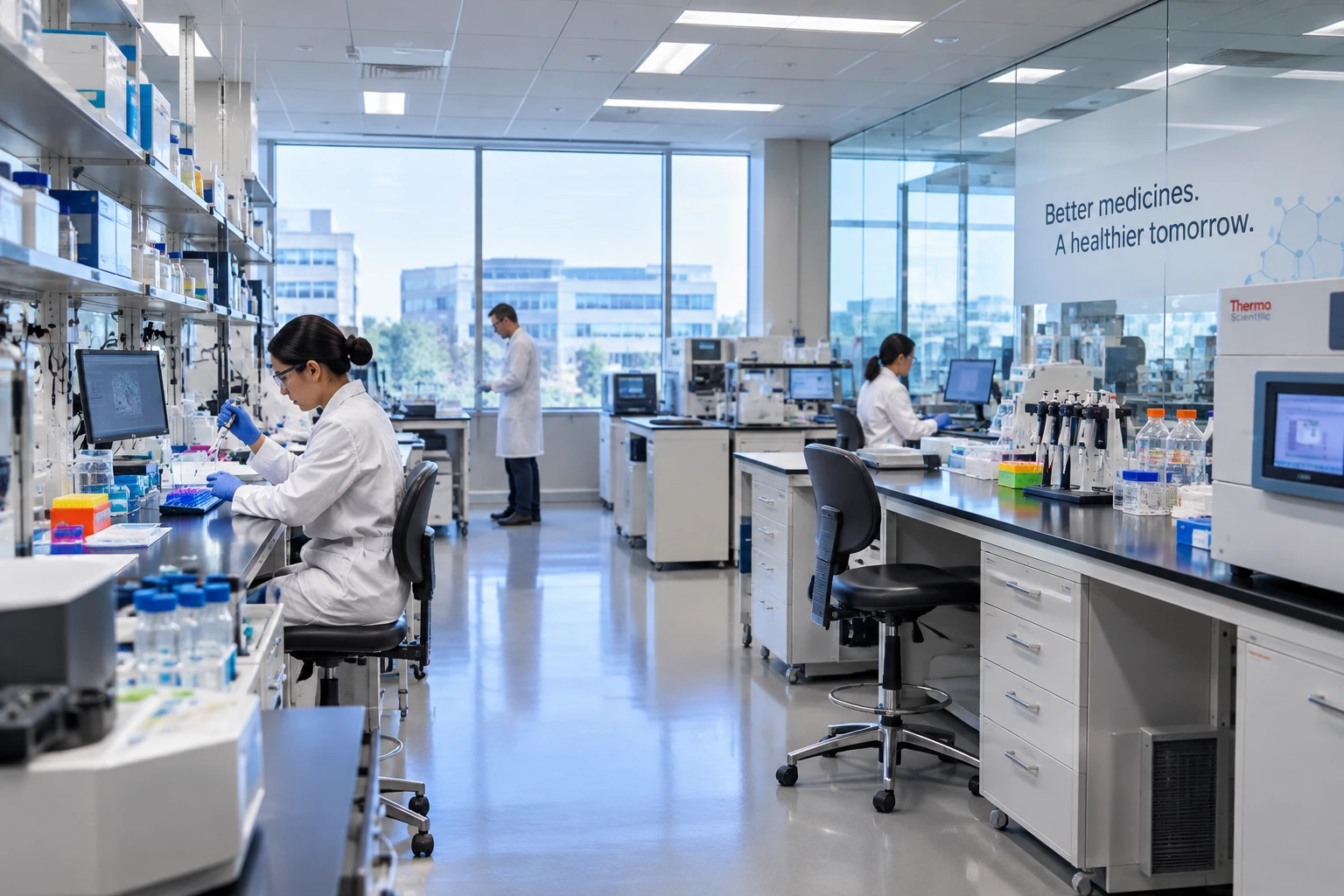
The company is a pharmaceutical organization with research and lab operations across multiple locations. Much of its data originates on standalone lab instruments and workstations: machines that sit behind strict firewalls, run under change-control rules, and in some cases belong to regulated systems that can't be auto-updated. Data from these systems has to reach enterprise storage, other sites, and cloud analytics platforms like S3, always along approved network paths. The team that manages GoodSync also acts as its system owner and product owner, maintaining documentation, SOPs, and deployment standards internally.
The Challenge: Moving Data Between Systems That Aren't Allowed to Talk to Each Other
Lab machines are isolated by design, but the data they produce is needed elsewhere, often quickly. Early on, getting that data out meant manual effort, difficult management, and a heavy approval process.
-

Strict Network Controls and Approval Processes
Firewall rules, approval workflows, and compliance requirements limited how data could move between locations. Any tool had to fit inside approved paths. Bucket-to-bucket and site-to-site transfers couldn't simply be opened up for convenience.
-

Hundreds of Standalone Lab Machines
Roughly 440 lab workstations and instruments ran independently. The early deployment was manual, with no central client-server management, making day-to-day administration a significant burden for a small team.
-

Very Large Datasets, Tight Turnaround
Analytics teams need data to land in S3 and other regions fast. Some transfers involve very large files and instruments holding millions of files, where a 14-hour delay means 14 hours before analysis can even begin.
-

Validation and Audit Requirements in Regulated Systems
Regulated systems require proof that data arrived complete and unaltered. The team needed checksum validation and tamper-resistant records of every transfer, which they had to assemble manually from logs.
Once you set it, you can almost forget it. Unless something happens to the source or there's no storage on the destination, we really don't manage the servers directly.
The Solution
The company standardized on GoodSync as the controlled bridge between isolated environments — upgrading clients, adding dedicated servers, and building a repeatable operating model around it.
-
Clients Write Directly to Enterprise Storage
After a platform upgrade, most lab clients were moved to a current release and configured to write straight to enterprise storage, removing manual handling and making data movement consistent across sites.
-
Dedicated Servers as a Compliant Bridge
A set of dedicated servers moves data between locations that can't connect directly. Because the GoodSync service is approved to span those segments, it's the compliant path for data that otherwise couldn't move at all.

-

Fast Delivery to S3 and SMB Shares
GoodSync delivers large datasets to S3, other regions, and SMB shares so downstream analytics can begin without delay. Most jobs are one-way backups, which suits regulated data movement.
How It Works
The company runs GoodSync in a locked-down, change-controlled environment, so the design emphasizes stability, security, and predictable upgrades over being on the newest release.
-
Server-to-Lab-Machine Connectivity
GoodSync servers connect to lab machines via GoodSync Connect (GSTP) or direct IP. Connections stay inside approved firewall rules and can be scheduled, monitored, and switched off, giving the security team clear visibility into every data path.
-
Version-Locked Releases for Regulated Systems
Rather than chase every release, the team tests a specific point release, locks it as the approved version, and deploys it as needed. Regulated systems are never auto-updated, and the approach has worked without issue.
-
Security-Aligned Service Accounts
Following the security team's requirements, the GoodSync service runs as a group managed service account (gMSA), with the application GUI run under a separate account so the same identity never runs both.
The Results
After upgrading and rebuilding the deployment around dedicated servers, the team went from a painful, manual setup to an environment that largely runs itself.
-

Management Effort Dropped Dramatically
Time spent administering GoodSync fell sharply. Unless a user reports a problem, the team doesn't actively manage the servers, which frees a small team to focus elsewhere.
-

Scale and Reliability on Large Transfers
Hundreds of jobs run across a handful of servers. In one case, a single instrument held roughly 2 million files, and GoodSync completed the transfer where other tools failed. It took a long time, but it finished the job.
-

Compliant Data Movement at Enterprise Scale
Data moves between isolated environments and to S3 entirely within approved network paths, keeping regulated systems compliant while making data available for analytics.
It just works, and it's low maintenance. Once the jobs are properly configured, it's point, click, configured, done.
Key Takeaways
-

A Compliant Bridge Between Isolated Systems
GoodSync moves data between network segments that can't connect directly, while staying inside the company's security and change-control rules
-

Set It and Forget It at Scale
Hundreds of endpoints and 800–900 jobs, running with minimal day-to-day management once configured


